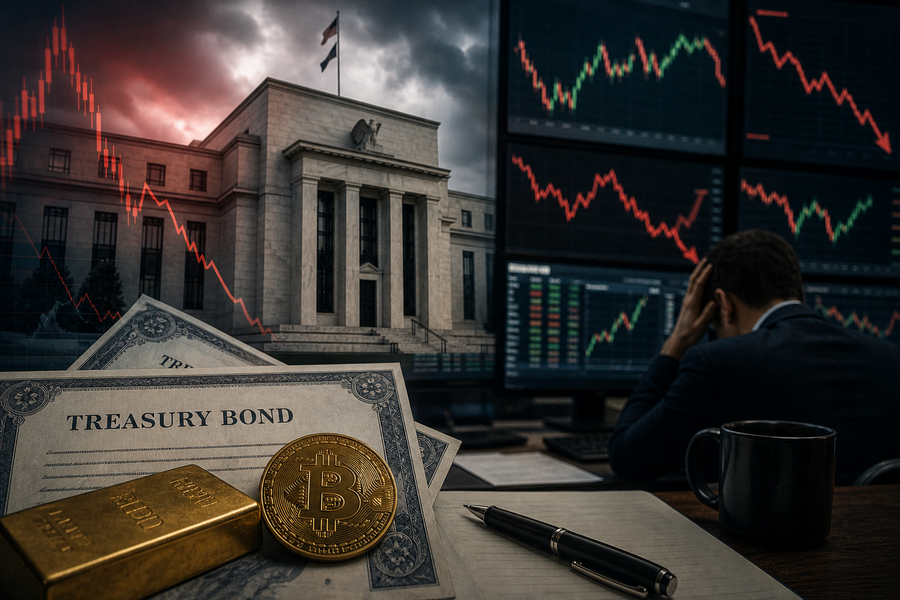
The Market Heard “Higher Rates” and Bitcoin Still Rose The first reaction to a hotter inflation report is usually simple: inflation is sticky, the Federal Reserve may stay aggressive, and risk assets should suffer. This time, the market did not follow that script. Core consumer prices rose 0.3% in August, above the 0.2% economists had expected, while headline inflation increased 0.4% for the month and 3.4% from a year earlier. Bitcoin moved higher after the data, and that reaction is more revealing than the headline numbers themselves. The Rate Hike Was Already Sitting on the Trading Desk Investors had spent days preparing for the possibility that the Federal Reserve would raise rates at its next meeting. A hot producer-price report had already pushed expectations in that direction, so the CPI release did not arrive as a complete surprise. By the time the numbers appeared, much of the hawkish message had already been reflected in bond yields, the dollar and interest-rate expectations. This is an important market lesson: an event can be negative in theory but barely move prices if traders have already positioned for it. What Actually Surprised Investors The more interesting question was not whether rates might rise. It was why Treasury yields continued to climb even as the government expanded long-duration bond buybacks. That combination suggested that investors were thinking beyond the next policy meeting. They were weighing inflation risk, government borrowing, debt supply and the credibility of economic policy. In other words, the market was not simply asking whether the Fed would raise rates by 25 basis points. It was asking whether policymakers still had control of the broader financial environment. Why Bitcoin Did Not Behave Like a Traditional Risk Asset Higher interest rates normally pressure bitcoin because safer yield-bearing assets become more attractive. But that relationship becomes less straightforward when yields rise because investors are worried about inflation and fiscal credibility. In that situation, bitcoin and gold can attract attention as assets that sit outside the traditional monetary system. Bitcoin does not produce cash flow, but its fixed supply narrative becomes more appealing when investors are uncomfortable with the possibility of currency debasement or persistent government borrowing. The Psychology Behind the Price Move From a trader’s point of view, the CPI number created two competing emotions. The first was caution: a hotter inflation reading could delay easier monetary policy. The second was recognition: if inflation remains difficult to control, alternative stores of value may become more relevant. That tension explains why bitcoin could rise even while the outlook for conventional liquidity appeared less friendly. Traders were not necessarily celebrating higher rates. They were reassessing what higher rates were saying about the economy and the institutions managing it. The Fed’s Next Decision May Not Be the Biggest Catalyst If the Federal Reserve delivers the rate increase that markets already expect, the immediate reaction could be limited. The bigger move may come from the language around the decision, the updated economic projections and the balance between inflation concerns and growth risks. A pause would be the real surprise under current expectations, and that could trigger a sharp rally in bitcoin and other risk assets. Markets often move most aggressively when policymakers fail to validate the consensus view. What I Am Watching Next I would focus less on the single policy rate and more on the behavior of the long end of the Treasury curve. If long-term yields continue rising despite official efforts to support the bond market, that would suggest investors are demanding more compensation for inflation, debt and policy uncertainty. I would also watch whether bitcoin can hold its gains alongside gold. If both assets remain firm while real yields and fiscal concerns stay elevated, the market may be expressing a broader loss of confidence in traditional monetary discipline.
My Bottom Line This is not a clean bullish signal for bitcoin, and it would be reckless to treat one positive reaction as proof that higher rates no longer matter. The more practical conclusion is that the market is becoming less one-dimensional. Inflation can be bad for liquidity, yet it can also strengthen the argument for scarce assets. For investors, the key is to avoid automatic reactions. A hotter CPI report may raise the probability of tighter policy, but the real market message may be about debt, credibility and whether investors still believe policymakers can keep the system stable.