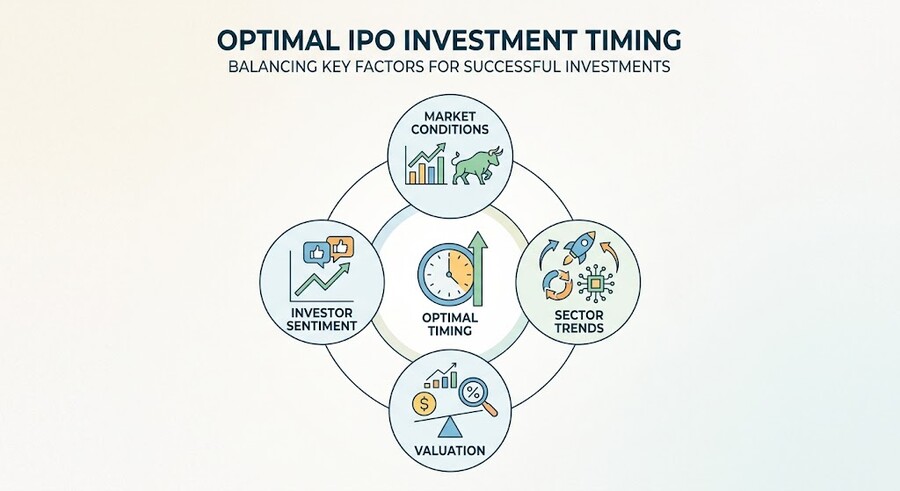
Introduction to IPOs Initial Public Offerings (IPOs) serve as a critical mechanism for companies to raise capital while providing early investors with an opportunity to participate in their growth. However, timing is paramount for investors aiming to maximize their returns. Market Conditions and Timing The performance of IPOs is significantly influenced by prevailing market conditions. Bull markets, characterized by rising stock prices and investor optimism, generally provide a conducive environment for successful IPOs. Conversely, bear markets may hinder stock performance and investor appetite, making timing crucial. Analyzing Historical Data Investors should examine historical IPO performance data to discern patterns that might inform future decisions. Historically, IPOs launched during market highs tend to outperform those initiated during downturns. A retrospective analysis of various market cycles can provide valuable insights into optimal investment windows. Sector Trends and Industry Timing Different sectors may experience unique timing dynamics. For instance, technology IPOs often follow product breakthroughs or significant advancements. Understanding the cycle and sentiment related to specific industries can guide investors in determining the best timing for participation. Valuation Considerations Investors must also consider the valuations of IPOs. High valuations in a reassuring market may yield short-term gains, but caution is needed as overvalued stocks may face corrections. A rigorous analysis of financials and growth projections is essential to navigate these waters effectively. Investor Sentiment and Demand Investor sentiment plays a pivotal role in IPO success. Gauging market enthusiasm through indicators like media coverage and social media buzz can provide insights into potential demand. Engaging with the investment community can help investors detect early signs of shifting sentiments. Strategic Approaches to Investing Considering various strategies when investing in IPOs can yield substantial benefits. Long-term holders may weather initial volatility better than those seeking quick profits. Additionally, diversifying investments across multiple IPOs can reduce risk exposure while enhancing potential rewards. Conclusion: The Importance of Timing The best time to invest in IPOs is dictated by a combination of market conditions, sector trends, valuations, and investor sentiment. By employing a strategic and informed approach, investors can position themselves to capitalize effectively on IPO opportunities, thereby unlocking potential value in their portfolios.